Discover Switzerland, Austria & Bavaria
Journey through spectacular mountain scenery and picturesque cities as you experience three Alpine countries. Spend four nights each in the UNESCO World Heritage city of Bern and the charming Alpine city of Innsbruck. Get a taste of Switzerland when you meet a local alphorn maker and yodelers and enjoy a fondue lunch. Explore Lucerne, the "Swiss Paradise on the Lake.” Visit Mozart's birthplace and the Mirabell Gardens, featured in The Sound of Music, during your time in Salzburg. The hills are alive on this enchanting journey across Switzerland, Austria and Bavaria.
Journey through spectacular mountain scenery and picturesque cities as you experience three Alpine countries. Spend four nights each in the UNESCO World Heritage city of Bern and the charming Alpine city of Innsbruck. Get a taste of Switzerland when you meet a local alphorn maker and yodelers and enjoy a fondue lunch. Explore Lucerne, the "Swiss Paradise on the Lake.” Visit Mozart's birthplace and the Mirabell Gardens, featured in The Sound of Music, during your time in Salzburg. The hills are alive on this enchanting journey across Switzerland, Austria and Bavaria.
Highlights
- Bern, the capital of the Swiss Confederation, has a population of about 660,000 in the metro area. It is located in west central Switzerland, in a bend of the Aare River. Legend says that the city got its name from the first animal the founder, Berchtold V, Duke of Zahringen, saw when he was hunting: a bear. In honor of this legend, bears are kept in an enclosure in the city center. The old town is a UNESCO World Heritage site, with its beautifully preserved medieval buildings, and the major sights are the bear pit, the Cathedral and the Zytglogge (medieval clock tower).
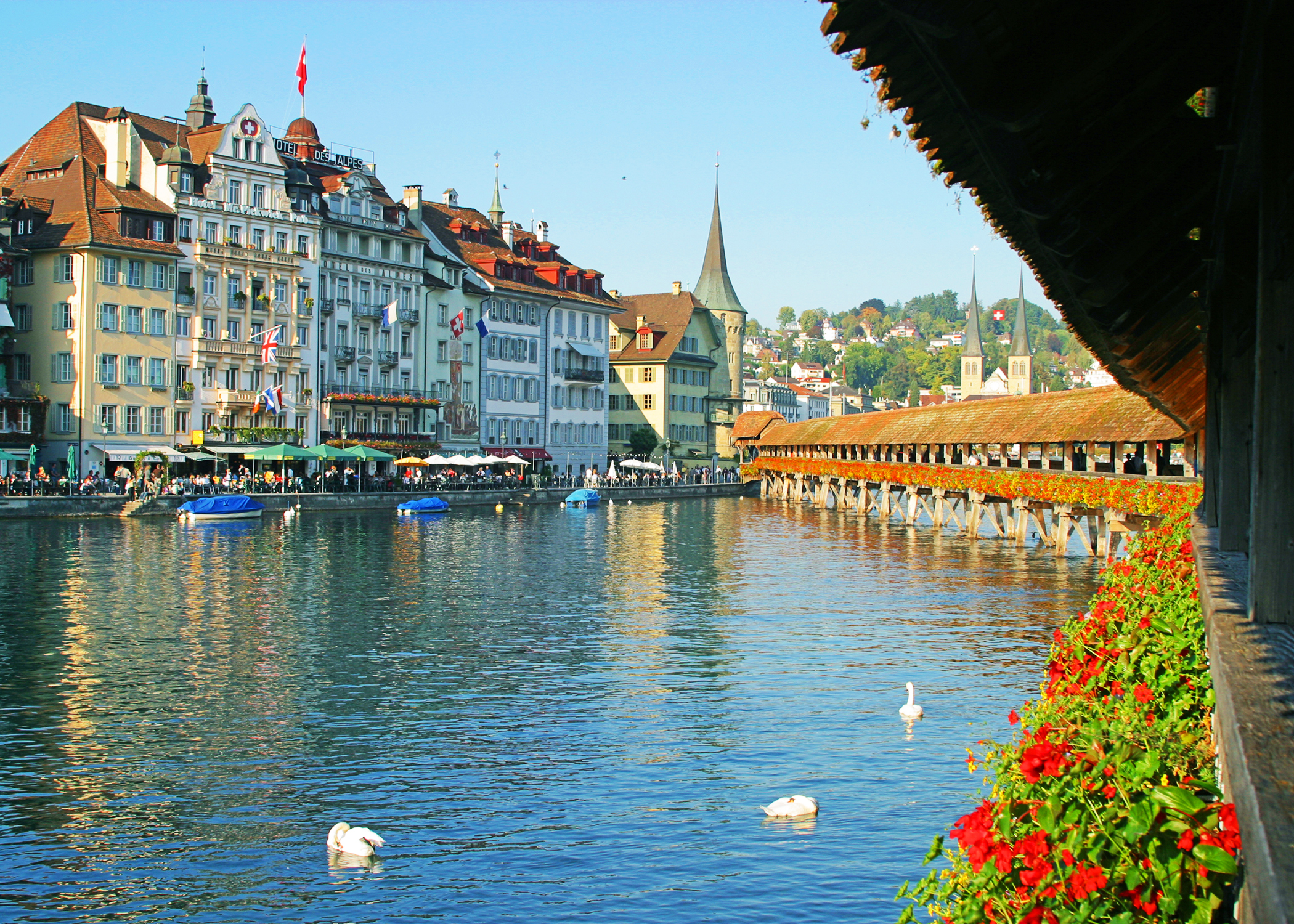
- This city of 80,000 people is in north-central Switzerland in the canton of Lucerne and sits on the shores of Lake Lucerne. The town began with a Benedictine monastery in the 8th century and gained importance from its location on trade routes. The most famous sights in Lucerne are the wooden Kapellbrucke (Chapel Bridge) across the Reuss River, the Hofkirche (Church of St. Leodegar) and the Swiss Museum of Transport. The city celebrates Carnival every year beginning the Thursday before Ash Wednesday. Mt Pilatus, with the world’s steepest cog railway, is visible from Lucerne.
- This Alpine region covers much of western Austria, and contains some of the highest peaks in the Alps, such as the 12,370 ft/3770 m Wildspitze. The city of Innsbruck is in the heart of the Austrian Alps, and Salzburg is in the foothills on the northeastern end of the mountains. Other well-known destinations in these mountains are Zell am See, St. Anton am Arlberg and Saalbach, and skiing and mountaineering are the most popular activities here.
- This is the capital of the state of Tyrol in the Alps of western Austria. Innsbruck is famous as a winter sports center and was the site of the 1964 and 1976 Winter Olympics. It is beautifully situated in the valley of the Inn River, and its most famous sights are the Golden Roof (a structure made from 2,800 gilded copper tiles that was added in 1500 to a building to celebrate the marriage of Emperor Maximilian I), the beautifully preserved city center with buildings covered in traditional Christmas decorations in the season, and the surrounding mountains.
- The name of this city means “Salt Fortress” and it comes from the custom of taxing salt shipments down the Salzach River. It is the 4th largest city in Austria, and the capital of the state of Salzburg. The baroque Old Town is a UNESCO World Heritage site, and the city sits in a valley surrounded by the Alps. Mozart was born here in the 18th century, and the city was the setting for “The Sound of Music”. Salzburg became part of Austria in the early 19th century, given by Bavaria. Some of the important sights are the Salzburg Castle, Salzburg Cathedral, Mirabell Gardens, the birthplace of Mozart and sites associated with “The Sound of Music.”
- These gardens are located on the grounds of the Mirabell Palace, built by Prince-Archbishop Wolf Raitenau for his mistress, Salome Alt in 1606, and she lived there for 6 years until he was deposed. The gardens were created in the early 18th century , and are geometrically designed and filled with mythology-inspired sculptures. Emperor Franz Joseph opened the gardens to the public in 1854. Scenes from “The Sound of Music” were filmed here, including the “Do Re Mi” song with the children dancing around a horse fountain.
- Bavaria is a state of Germany, located in the southeast, and its capital is Munich. It makes up almost 1/5 of Germany today, and was a powerful Duchy and Kingdom dating from 555 until its inclusion in modern Germany in the 19th century. The flag is white and blue, representing the colors of sky and heaven. Much of southern Bavaria is in the Alps, including the town of Oberammeragau. Many Bavarians consider themselves Bavaria first, German second. For many Americans, Bavaria brings to mind cars (BMW) and beer (Munich’s Oktoberfest).
- Inspired by Versailles and built by King Ludwig II of Bavaria in 1886, Linderhof Palace has a Baroque facade with rich Rococco ornamentation inside. The Palace is an excellent way to see the incomparable artistry of the era’s craftspeople. Look for such lush decorations as a carpet made of ostrich plumes, an ivory candelabra and a table top inlayed with lapis-lazuli, amethyst and chalcedony.
- Traditional costumes for the Tyrol region in Austria include lederhosen and dirndls, and brightly embroidered fabrics. The dances are similar to jigs, and the most famous is the Schuhplattler (shoe-slapping) dance. The instruments may include long Alpine horns, cow bells, zithers and harps. Yodeling is also sometimes featured.
Hotels
- NH Bern the Bristol — Bern
- AC Hotel by Marriott — Innsbruck
Details
- Tour Operator
- Collette
- Start City
- Bern
- End City
- Innsbruck
- Duration (Days)
- 10
- Activity Level
- Level 3
What's Included
- 13 meals included
- Bern, the capital of the Swiss Confederation, has a population of about 660,000 in the metro area. It is located in west central Switzerland, in a bend of the Aare River. Legend says that the city got its name from the first animal the founder, Berchtold V, Duke of Zahringen, saw when he was hunting: a bear. In honor of this legend, bears are kept in an enclosure in the city center. The old town is a UNESCO World Heritage site, with its beautifully preserved medieval buildings, and the major sights are the bear pit, the Cathedral and the Zytglogge (medieval clock tower).
- This city of 80,000 people is in north-central Switzerland in the canton of Lucerne and sits on the shores of Lake Lucerne. The town began with a Benedictine monastery in the 8th century and gained importance from its location on trade routes. The most famous sights in Lucerne are the wooden Kapellbrucke (Chapel Bridge) across the Reuss River, the Hofkirche (Church of St. Leodegar) and the Swiss Museum of Transport. The city celebrates Carnival every year beginning the Thursday before Ash Wednesday. Mt Pilatus, with the world’s steepest cog railway, is visible from Lucerne.
- This Alpine region covers much of western Austria, and contains some of the highest peaks in the Alps, such as the 12,370 ft/3770 m Wildspitze. The city of Innsbruck is in the heart of the Austrian Alps, and Salzburg is in the foothills on the northeastern end of the mountains. Other well-known destinations in these mountains are Zell am See, St. Anton am Arlberg and Saalbach, and skiing and mountaineering are the most popular activities here.
- This is the capital of the state of Tyrol in the Alps of western Austria. Innsbruck is famous as a winter sports center and was the site of the 1964 and 1976 Winter Olympics. It is beautifully situated in the valley of the Inn River, and its most famous sights are the Golden Roof (a structure made from 2,800 gilded copper tiles that was added in 1500 to a building to celebrate the marriage of Emperor Maximilian I), the beautifully preserved city center with buildings covered in traditional Christmas decorations in the season, and the surrounding mountains.
- The name of this city means “Salt Fortress” and it comes from the custom of taxing salt shipments down the Salzach River. It is the 4th largest city in Austria, and the capital of the state of Salzburg. The baroque Old Town is a UNESCO World Heritage site, and the city sits in a valley surrounded by the Alps. Mozart was born here in the 18th century, and the city was the setting for “The Sound of Music”. Salzburg became part of Austria in the early 19th century, given by Bavaria. Some of the important sights are the Salzburg Castle, Salzburg Cathedral, Mirabell Gardens, the birthplace of Mozart and sites associated with “The Sound of Music.”
- These gardens are located on the grounds of the Mirabell Palace, built by Prince-Archbishop Wolf Raitenau for his mistress, Salome Alt in 1606, and she lived there for 6 years until he was deposed. The gardens were created in the early 18th century , and are geometrically designed and filled with mythology-inspired sculptures. Emperor Franz Joseph opened the gardens to the public in 1854. Scenes from “The Sound of Music” were filmed here, including the “Do Re Mi” song with the children dancing around a horse fountain.
- Bavaria is a state of Germany, located in the southeast, and its capital is Munich. It makes up almost 1/5 of Germany today, and was a powerful Duchy and Kingdom dating from 555 until its inclusion in modern Germany in the 19th century. The flag is white and blue, representing the colors of sky and heaven. Much of southern Bavaria is in the Alps, including the town of Oberammeragau. Many Bavarians consider themselves Bavaria first, German second. For many Americans, Bavaria brings to mind cars (BMW) and beer (Munich’s Oktoberfest).
- Inspired by Versailles and built by King Ludwig II of Bavaria in 1886, Linderhof Palace has a Baroque facade with rich Rococco ornamentation inside. The Palace is an excellent way to see the incomparable artistry of the era’s craftspeople. Look for such lush decorations as a carpet made of ostrich plumes, an ivory candelabra and a table top inlayed with lapis-lazuli, amethyst and chalcedony.
- Traditional costumes for the Tyrol region in Austria include lederhosen and dirndls, and brightly embroidered fabrics. The dances are similar to jigs, and the most famous is the Schuhplattler (shoe-slapping) dance. The instruments may include long Alpine horns, cow bells, zithers and harps. Yodeling is also sometimes featured.
Pricing
| Option | Price | Departure | Return |
|---|---|---|---|
| Double | USD 4,699.00 | 2027-09-01 | |
| Single | USD 5,899.00 | 2027-09-01 | |
| Triple | USD 4,599.00 | 2027-09-01 | |
| Double | USD 4,699.00 | 2027-09-08 | |
| Single | USD 5,899.00 | 2027-09-08 | |
| Triple | USD 4,599.00 | 2027-09-08 | |
| Double | USD 4,699.00 | 2027-09-29 | |
| Single | USD 5,899.00 | 2027-09-29 | |
| Triple | USD 4,599.00 | 2027-09-29 |
Itinerary
-
Day 1: Overnight Flight
Discover spectacular Switzerland, Austria and Bavaria on a tour featuring four-night stays in two cities.
-
Day 2: Bern, Switzerland
Arrive in Bern, Switzerland’s charming capital and a UNESCO World Heritage Site. With its cobblestone streets and medieval architecture, Bern feels beautifully preserved in time. As arrival times will vary, there is no scheduled sightseeing today. Spend the day as you wish, exploring the city independently. This evening, gather with your fellow travelers for a welcome dinner featuring local cuisine.
-
Day 3: Bern
Enjoy a panoramic sightseeing tour of Bern with a local guide. Highlights include the Bundeshaus (the Swiss Parliament), the famous Bear Pit, the Rose Gardens, and the soaring Gothic cathedral that crowns Old Town’s skyline. The afternoon is free to explore independently. Perhaps you’ll take a ride on the Gurtenbahn funicular, climbing Gurten Mountain to an altitude of 2,574 feet (858 meters) for sweeping views of the city and the surrounding countryside.
-
Day 4: Bern - Habkern - Bern
Today, enjoy the morning at leisure in Bern. This afternoon, travel to Habkern, a postcard-perfect mountain village near Interlaken. Start your afternoon with a fondue lunch at a local restaurant before enjoying a visit at a local workshop to learn how the alphorn is crafted, and enjoy a lively yodeling demonstration led by a professional performer. Enjoy an evening at leisure in Bern.
-
Day 5: Bern - Lucerne - Bern
Set out for Lucerne, often called the “Swiss Paradise on the Lake.” Join a guided walking tour of Altstadt featuring the covered Chapel Bridge, the famous Water Tower, the Renaissance-style Town Hall, and the Lion Monument, carved from natural rock to commemorate the heroic Swiss Guard. Enjoy your free time exploring this magnificent city, or perhaps choose an optional tour to the legendary Mount Pilatus. Return to Bern this evening for dinner at one of the city’s renowned restaurants.
-
Day 6: Bern - Vaduz, Liechtenstein - Innsbruck, Austria
En route to Innsbruck, make your way through Liechtenstein, the world’s smallest German-speaking country and the only European country to lie entirely within the Alps. Spend some time in Vaduz, strolling through the charming old quarter and along the pedestrian-friendly Stadtle, referred to as “small town” by the locals. Continue into Austria and arrive in Innsbruck, nestled in the heart of the Alps. The afternoon is free to settle in and explore.
-
Day 7: Innsbruck
This morning, it’s your choice! Join a guided walk highlighting Innsbruck’s history and landmarks, including Maria-Theresien-Strasse, the Hofburg, and the “Golden Roof” -OR- you may embark on a tour to the Nordkette, Innsbruck’s stunning mountain range, where you’ll enjoy breathtaking alpine views and experience the dramatic scenery that rises directly from the heart of the city. Enjoy a free afternoon in this charming town or perhaps you’ll choose to join an optional tour to the alpine village of Seefeld. This evening, delight in a Tyrolean folklore show,* hosted by a well-known local musical family.
-
Day 8: Innsbruck - Salzburg - Innsbruck
Travel through scenic countryside to Salzburg. Discover the city on a walking tour featuring Mirabell Gardens, the quaint Getreidegasse (Mozart’s birthplace), and other highlights of this Baroque jewel. Enjoy lunch at a legendary 1,200-year-old St. Peter’s Restaurant, the oldest in Austria and still owned by the monks.
-
Day 9: Innsbruck - Bavaria, Germany - Innsbruck
Cross into Bavaria to tour Linderhof Palace, the only palace — out of three — that King Ludwig II lived to see completed. With an expert guide, explore its lavish interiors inspired by Versailles. Continue to Ettal Abbey** — a Benedictine monastery founded in 1330, where you’ll tour the Basilica and enjoy a brewery visit with tastings. Return to Innsbruck for a farewell dinner at a traditional Tyrolean restaurant.
-
Day 10: Innsbruck - Tour Ends
Your tour comes to an end in Innsbruck.